
We are a community dedicated to working on how we can better develop text to augment our capabilities and we invite you to join us. We believe that the potential of richly interactive text to truly augment how we think & communicate is massive. Text after all, is externalized symbols we can interact with to extend our mind’s reach. Therefore text is not just a medium, it is also a tool for thought, and we are looking Beyond Visual Range.
A key premise of this work is that fundamentally, understanding is not only found in text, it is created through text, through the act of writing, of authorship.
Current Research Questions
As of early 2026, the research is primarily focused on spatial text, i.e. text as experienced in a VR/AR/MR/XR headset, soon expected to be experienced in glasses, along with how information interacted with in spatial knowledge environments can be shared and exported to framed environments.
Key issues arising out of that being actively instigated are the free flow of user data (through Visual-Meta and related approaches), annotations as knowledge objects, useful integration of AI into workflow to enhance user understanding and not bypass the user, and mapping of knowledge in framed and spatial environments. This includes issues of hiding & revealing information as objects and clusters as well as handling of contextual versus focal information.
Spatial Text
Literacy changed how we think (Ong). When text was released from frozen substrate and became ‘born digital’ (Grigar), what we could do with it — and how we could think with it — changed. We see the emergence of textual knowledge beyond the ‘framed’ experiences of viewing text on laptop or desktop screens, and instead also in high performance XR headsets, as a tremendous opportunity. We ask how thinking with spatialized knowledge might further change how we think, learn and communicate.
Along with opportunity, we also have concerns. We are concerned that corporations will own the spatial knowledge formats, as we have seen happen before with various office file formats.
We are also concerned that we will not unleash our collective imaginations as to what this new medium can be, sufficiently before the new interactions become ‘normal’ — there needs to be a myriad of ways to experience knowledge. There needs to be many different ways of interacting with spatialized knowledge, tailored to the task at hand and the person carrying out the task. There needs to be many different kinds of minds who are an active part of the dialogue. The Graphical User Interface, developed in the 1960s and 1970s coalesced quickly into Mac and Windows desktop metaphors which we have had ever since. When knowledge fills our space we cannot afford to be limited to just one paradigm of how work should be done in that space.
To address these concerns we are experimenting with knowledge interactions in XR (VR/AR), both as pure experiments as shipping products which fit into existing workflows, fostering dialogue (through the Symposium, Monday Open Office Hours and series of Publications) and developing a minimalist spatial format to allow for open sharing of spatial knowledge spaces.
Intelligence Augmentation
Our approach is to focus on Intelligence Augmentation (IA). We need to augment how we think, not hope an external system will do that for us (as is the potential with AI). This flows from The Future of Text founder Frode Hegland’s mentor, Doug Engelbart’s perspective, as captured by this exchange* (Doug agreed it was representative of their discussions though not a literal quote):
Marvin Minsky: “We are going to make machines intelligent!”
Doug Engelbart: “What are you going to do for people?”
Neuroscientist Gregory Hickok* highlights that “perception is highly active”, something we feel means that we should work to make knowledge in text more richly and usefully interactive. Since thinking is mental interactivity, we should therefore increase the interaction as far as possible with the knowledge in the external world. We see the coming use of headsets as a historic opportunity to unleash the potential of text and to harness the power of text — including with AI — in multidimensional spaces, far beyond the narrow bandwidth of only voice or rectangular framed screens.
It is difficult to imagine what a future of text will be in traditional systems, since culturally we ‘know’ what the ‘truth’ is of digital text: word processing, web, messages and a few other uses. We need to dream to innovate but as Doug Engelbart pointed out, dreaming is hard work.
With the advent of XR we hope to again inspire dreaming of how we can better use text to think better.
The Book, Symposium, Metadata and XR coding work was supported by a grant from the Alfred P. Sloan Foundation 2024–2025.

Work
Our work is to host dialogue, develop infrastructures and build software so that we can all experiment with what experiencing augmented environments are like:
- Dialog : We gather in weekly Lab meetings with monthly special presentations as well as an annual series of Future of Text Symposia, for over a decade. The resulting work is published in our Journal and in a series of compendium books.
- Experiences : We have developed Software for reading and authoring in traditional digital environments and XR environments.
- Infrastructure : We work to develop open and robust infrastructures, primarily through Visual-Meta.
Aim
The aim of the work is to give mastery of tools for thought to help people feel mastery of thinking in general.
More specifically, the aim of the work is to make text better connected and more interactive to support augmenting how we think and communicate. A visual illustration of one of our approaches of this is the integrated Concept Map in our macOS software ‘Author’:
News
Some of this work was covered in a recent BBC interview.
Current work on a Digital Library function in Reader software and how to make the multiple hundreds of thousands of words in The Future of Text editions accessible to the reader through an ‘AI Edition’.
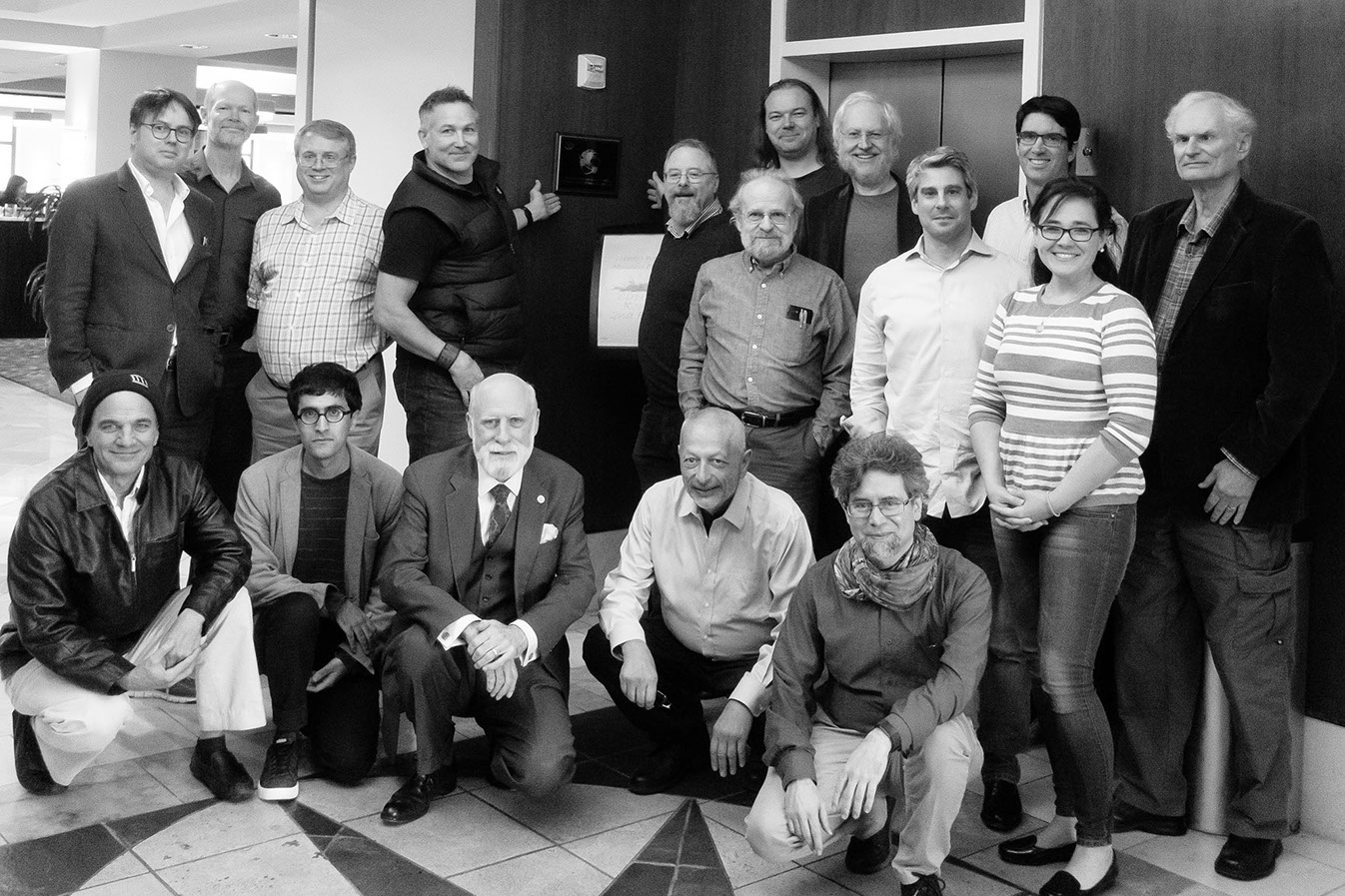
If we truly value knowledge, we must also value how knowledge is created, stored, shared, accessed & interacted with.
Many Minds, Many Kinds of Minds : Join us!
We are a proactively inclusive society of people who are concerned with improving how we think, learn and communicate using text. Mono-Mindsets will not get us very far. If you would like to join any of our Open Monday Office Hours, please visit us at futuretextlab.info.
Frode A. Hegland, PhD
augmentedtext.info
thefutureoftext.org